60 Photography Quotes for Instagram That Frame Every Shot
The right caption can turn a good photo into a great post. This collection gives you 60 photography quotes for Instagram, split into two parts. First, 25 real lines from legendary photographers like Ansel Adams, Dorothea Lange, and Robert Capa, quoted word for word. Then, 35 original caption lines written fresh for photographers, clearly labeled so you always know what you are sharing. In addition, you get practical tips on caption length, crediting, and matching quotes to your photo’s mood.
At a Glance
Find your match fast. The table below pairs common photo types with the caption style that fits best, so you can pick a quote in seconds.
| Your Photo | Best Caption Style | Start With |
|---|---|---|
| Portrait | Warm and personal, about connection | Eisenstaedt on clicking with people |
| Landscape | Calm and short, about light or stillness | An original golden-hour line |
| Street scene | Bold, about the decisive moment | Cartier-Bresson on the attentive eye |
| Black and white | Timeless, full of feeling | Capa on getting close enough |
| Travel shot | Curious and open, about seeing | Sontag on conferring importance |
| Pet or family | Tender and simple | An original about quiet moments |
Scroll down to your section once you know your style. Every quote below sits in its own block, ready to copy, and the originals are marked so credit stays honest. In short, this table saves you the scroll when you already know what you shot. Bookmark this page so your next upload takes seconds, not minutes. Future you will be grateful.
Light & the Craft

Every strong photo starts with light and a patient eye. These lines honor the craft itself: practice, patience, and the small miracle of freezing time. For example, pair them with behind-the-scenes shots, gear flat-lays, or any image where the process mattered as much as the result.
From the Masters
These seven lines come from photographers who shaped the medium. Each one is quoted word for word, so credit the name when you share it.
“You don’t take a photograph, you make it.”
Ansel Adams
Adams meant that intention beats equipment. It is still the most shared photography line online, and it fits any photo you worked hard to create.
“A great photograph is one that fully expresses what one feels, in the deepest sense, about what is being photographed.”
Ansel Adams
“In photography there is a reality so subtle that it becomes more real than reality.”
Alfred Stieglitz
“To consult the rules of composition before making a picture is a little like consulting the law of gravitation before going for a walk.”
Edward Weston
Weston teased photographers who overthink technique. As a result, this line works well under experimental or rule-breaking shots.
“One should not only photograph things for what they are but for what else they are.”
Minor White
“Photography is a way of feeling, of touching, of loving.”
Aaron Siskind
“The camera is an instrument that teaches people how to see without a camera.”
Dorothea Lange
Original Lines for Your Feed
Two fresh lines written for this collection. They are free to use as captions, and no credit line is needed.
“I chase light the way other people chase sunsets, with my whole heart and both hands on the camera.”
Original
“Some days the light does all the talking, and I just press the button.”
Original
Portraits
Portraits are conversations without words. The best captions say something about the person, not the camera. For instance, these lines suit headshots, friend photos, and family portraits where personality leads the frame.
From the Masters
Six masters on photographing people. Their advice repeats one theme: connection first, shutter second.
“It is more important to click with people than to click the shutter.”
Alfred Eisenstaedt
This line doubles as caption advice. It reminds you to mention the person, not just the photo.
“A photograph is a secret about a secret. The more it tells you, the less you know.”
Diane Arbus
Arbus found mystery in every face she met. Her line suits portraits with an unreadable expression, where the story stays deliciously unclear.
“A good photograph is one that communicates a fact, touches the heart and leaves the viewer a changed person for having seen it.”
Irving Penn
“If you wait, people will forget your camera and the soul will drift up into view.”
Steve McCurry
“There are always two people in every picture: the photographer and the viewer.”
Ansel Adams
“One should really use the camera as though tomorrow you’d be stricken blind.”
Dorothea Lange
Photographing your best friend? Our best friend sister quotes collection has lines written for that exact bond. For a beloved pet, our goodbye dog quotes collection helps when the photo is a tribute to a furry friend.
Original Lines for Your Feed
Three new lines for the portraits on your grid. They keep the focus on the person, where it belongs.
“Her laugh did half the work; my camera just showed up on time.”
Original
“A portrait is a promise: I saw you, exactly as you are.”
Original
“He looked away, and the photo got honest all by itself.”
Original
Landscapes & Nature
Nature gives photographers endless material. These captions fit mountains, lakes, forests, and skies. Moreover, short lines work best here, because the photo already says most of it.
From the Masters
Three legends on shooting the natural world. One of them spent decades in Yosemite, and that patience shows in every line.
“When words become unclear, I shall focus with photographs. When images become inadequate, I shall be content with silence.”
Ansel Adams
Adams wrote this about his Sierra Nevada work. It suits any landscape that left you speechless.
“Photography can never grow up if it imitates some other medium. It has to walk alone; it has to be itself.”
Berenice Abbott
Abbott defended photography as its own art. Her confidence fits any landscape you shot your own way, without copying trends.
“Which of my photographs is my favorite? The one I’m going to take tomorrow.”
Imogen Cunningham
Cunningham kept shooting into her nineties. Her forward-looking line suits sunrise shots and new beginnings.
Original Lines for Your Feed
Six fresh lines for trails, peaks, and quiet water. Take any of them straight to your caption box.
“The mountain did not move for me, but it let me watch.”
Original
“Golden hour is nature’s way of saying good job, you showed up.”
Original
“I came for the view and stayed for the quiet.”
Original
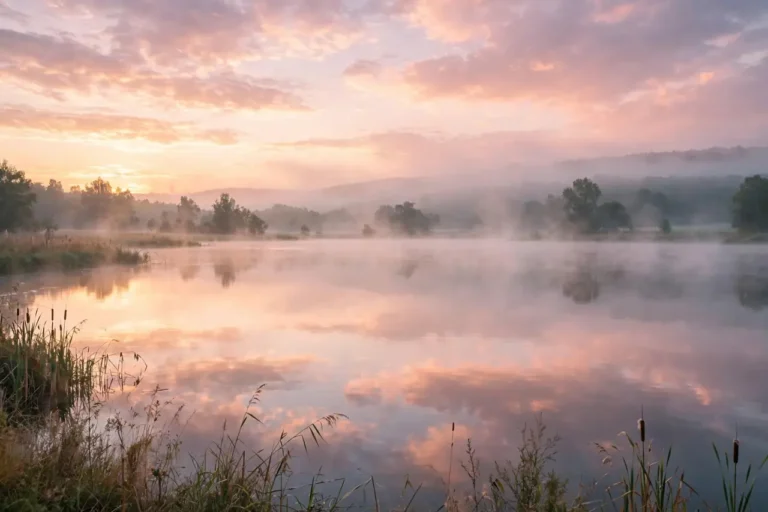
“The lake held the sky so still I almost believed it.”
Original
“Every trail teaches the same lesson: look up more often.”
Original
“Fog gave the forest a secret, and my camera kept it.”
Original
Still water and reflections deserve their own mood. Our mirror quotes collection pairs well with lakes and glassy mornings.
Street
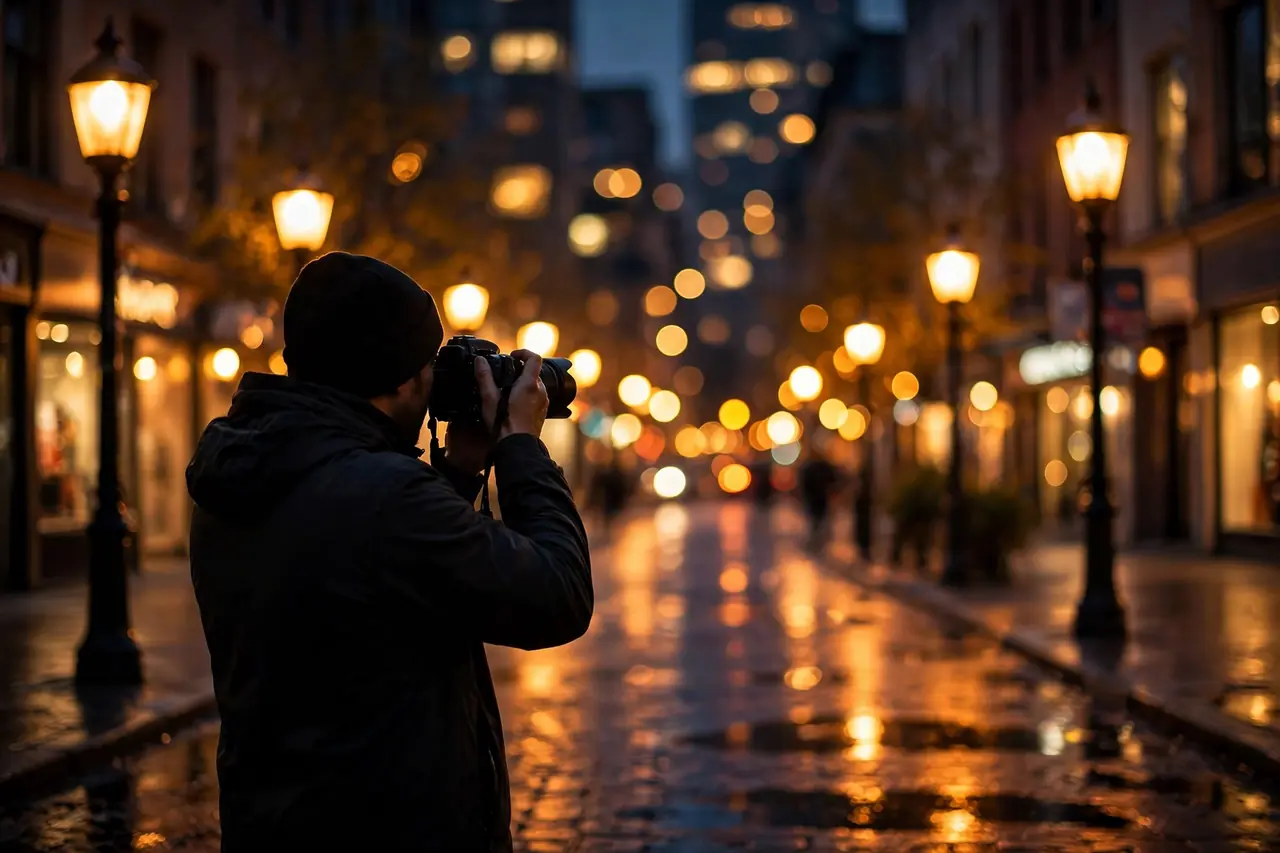
The street never waits for you. These lines celebrate quick eyes and brave shutters. In addition, they fit city shots, candid frames, and any photo grabbed in a moving moment.
From the Masters
Five voices from the sidewalk. Cartier-Bresson called it the decisive moment, and the rest of this group chased the same lightning.
“Photography is, for me, a spontaneous impulse coming from an ever-attentive eye which captures the moment and its eternity.”
Henri Cartier-Bresson
He once waited hours for a single frame. His patience is a good reminder when the street feels slow.
“To photograph is to hold one’s breath, when all faculties converge to capture fleeting reality.”
Henri Cartier-Bresson
“I photograph to find out what something will look like photographed.”
Garry Winogrand
Winogrand shot fast and asked questions later. His line is perfect for experimental street frames.
“I am at war with the obvious.”
William Eggleston
Eggleston found beauty in parking lots and diners. His defiance suits any photo of the overlooked and ordinary.
“Photography is about savoring life at 1/100th of a second.”
Marc Riboud
Riboud traveled the world with a Leica and endless curiosity. His line flatters any split-second catch, from crosswalks to cafe windows.
Original Lines for Your Feed
Four new lines for city wanderers. They carry the noise and neon of real streets.
“The street never poses, and that is exactly why I love it.”
Original
“A stranger’s shadow crossed my frame and made the whole shot.”
Original
“City lights do not sleep, so neither does my camera.”
Original
“I walked past this corner a hundred times before it finally spoke.”
Original
Black & White
Removing color removes distraction. What stays is shape, shadow, and feeling. These nine lines suit monochrome portraits, architecture, and moody minimal frames.
Many photographers convert weak color shots to black and white. The strong ones, however, were seen in monochrome from the start.
Convert with intent, not as a rescue. The best monochrome shots were composed for tone from the very beginning.
From the Masters
Two giants of black-and-white thinking. Capa shot war up close, while Lange froze quiet American moments.
“If your pictures aren’t good enough, you aren’t close enough.”
Robert Capa
His rule is blunt and useful. If a shot feels empty, move your feet before you blame your camera.
“Photography takes an instant out of time, altering life by holding it still.”
Dorothea Lange
Lange’s line explains the whole medium in one breath. It works beautifully under any timeless-feeling frame.
Original Lines for Your Feed
Seven new monochrome lines. They lean into grain, contrast, and the drama of less.
“Stripped of color, the photo had nowhere to hide, and I loved it.”
Original
“Grain, shadow, and a little courage: that is the whole recipe.”
Original
“In black and white, even silence has a texture.”
Original
“No color to lean on, so the feeling had to carry the frame.”
Original
“The contrast did the talking; I just framed it.”
Original
“Monochrome turns an ordinary Tuesday into a small film.”
Original
“Shadows are just light taking a short break.”
Original
Travel
Travel photos are proof you went and saw. These lines fit skylines, markets, coastlines, and quiet alleys. For example, use the curious ones for first-day shots and the reflective ones for the trip’s final post. Keep a notes app list of favorites while you travel, so the caption is ready before you land.
From the Masters
Two sharp minds on seeing. Sontag wrote about images, while Erwitt spent a lifetime finding jokes and grace in ordinary streets.
“To photograph is to confer importance.”
Susan Sontag
Sontag argued that pointing a camera is itself a statement. Her line gives weight to any travel photo you chose to take.
“To me, photography is an art of observation. It’s about finding something interesting in an ordinary place.”
Elliott Erwitt
Erwitt found wonder in bus stops and sidewalks. His line flatters any photo of an unglamorous but beloved corner.
Original Lines for Your Feed
Seven new travel lines, from boarding gates to backstreets. They keep the wonder without sounding like a brochure.
“New streets, same camera, endless reasons to stop walking.”
Original
“I collect boarding passes and the light that comes with them.”
Original
“Every new city hands my camera a fresh assignment.”
Original
“The map said go left; the light said go right.”
Original
“Jet lag fades, but a good travel photo keeps the feeling.”
Original
“Home is where my camera bag is.”
Original
“I travel to see, and I photograph to remember seeing.”
Original
Shooting a winter market or a snowy old town? Our gingerbread quotes add a seasonal touch to festive travel posts.
Instagram-Ready Originals
Sometimes you need a caption, not a quotation. These six lines were written for this collection, so they will not appear on ten other feeds. Use them as-is or tweak a word to fit your shot.
“Posting this before the moment changes its mind.”
Original
“My camera roll is full, and so is my heart.”
Original
“Shot on a whim, kept on purpose.”
Original
“This frame earned its spot on the grid.”
Original
“Proof that I looked up from my phone at least once today.”
Original
“New post, same obsession with good light.”
Original
Make them yours with one small edit. Swap in your location, name the lens, or add the time of day, and the line becomes unmistakably yours. In short, original captions plus good tags give a post its best chance.
Pair any of these with three to five hashtags and a location tag. Small tweaks keep your feed personal while the structure does the heavy lifting.
Test a caption before it goes on the grid. Post the line on a story first and watch which one earns replies. The winners graduate to permanent posts, while the quiet ones stay as experiments. Over a month, you will learn exactly which tone your audience loves, and your caption bank will write itself.
How to Use These Quotes
A great quote still needs good handling. These five ideas will help your captions read naturally and reach more people.
Respect the 125-Character Preview
Instagram cuts captions after about 125 characters in the feed. Therefore, put your quote or hook first and save hashtags for the end. If the quote runs long, trim it with an ellipsis rather than letting the app cut it mid-thought. As a result, scrollers see the good part first.
Match the Quote to the Mood
A joyful beach photo and a foggy street need different words. First, name the feeling in one word: calm, bold, tender, or curious. Next, pick a quote that carries that same feeling. For example, Capa’s bold line lifts a gritty street shot, while an original golden-hour line softens a sunset. Mismatched moods confuse viewers, so take ten seconds to check.
Credit Photographers the Right Way
Real quotes deserve real credit. Write the photographer’s name in the caption or the first comment, exactly as shown here. Never present a famous line as your own words. In addition, original lines marked Original need no credit, so they are safe for brands and client work. Honest credit builds trust with your audience.
Save Originals for Stories and Reels
Original lines shine in fast formats. They read well over video, and no one will fact-check the attribution. Try one as on-screen text in a Reel, then add the location sticker. Meanwhile, keep famous quotes for grid posts where they have room to breathe.
Add Hashtags After the Caption
Hashtags still help discovery, but they should never lead. Place three to five niche tags after your caption, such as #streetphotography or #goldenhour. Finally, add one broad tag like #photography for reach. Too many tags look spammy, so keep the set tight and relevant.
Captions & Social Shares
Need something short and ready? These twelve lines are built for copying. Each one fits the feed preview and leaves room for hashtags.
Hashtags work hardest when they describe the actual photo. Pick tags that match the genre, then add one or two broad ones for discovery.
Line breaks make long captions readable. Hit return between the quote and the hashtags, so the tags sit on their own lines. Many photographers also hide hashtags in the first comment to keep the caption clean. Either way works, so pick the style that suits your grid. Update your tag sets every few months as trends shift.
- Chasing light, catching moments. #photographyquotesforinstagram
- Every frame tells a story. #visualstorytelling
- Shot with heart, shared with love. #photographylovers
- Golden hour never disappoints. #goldenhour
- In a world of filters, stay raw. #nofilter
- My lens, my rules. #streetphotography
- Collecting sunsets, one click at a time. #landscapephotography
- Black, white, and everything felt. #blackandwhitephotography
- Wander often, shoot always. #travelphotography
- Portraits of people I admire. #portraitphotography
- The camera in my hand beats the one at home. #mobilephotography
- Light first, everything else later. #photographyquotesforinstagram
Want captions with extra style? Our quotes in cursive collection shows how to format lines beautifully.
FAQ
Quick answers to the questions photographers ask most.
Can I use famous photographer quotes as Instagram captions?
Yes, and photographers do it every day. Keep the quote short, credit the photographer by name, and never claim the words as your own. Short excerpts used with credit are widely accepted on social platforms. When in doubt, choose one of the original lines in this collection instead.
What is the ideal caption length for Instagram photos?
Instagram shows about 125 characters before the “more” button, so front-load your best words. A one-line quote plus three to five hashtags is a proven format. Longer stories can work, but only if the first line earns the tap. For quotes, shorter almost always wins.
Should I write my own captions or use quotes from photographers?
Use both, because they do different jobs. Famous quotes borrow authority and spark recognition, while your own words build a personal voice. Many successful accounts alternate between the two. Start with quotes while you find your style, then mix in more original lines over time.
How do I credit a photographer quote on Instagram?
Put the name right under the quote or in the first comment, like “Ansel Adams”. Keep the spelling exact and avoid adding a dash before the name. For original lines marked Original here, no credit is needed. Consistent crediting shows respect and keeps your account trustworthy.
Do quote captions actually help Instagram engagement?
They can, because quotes invite saves and shares. A line that resonates gets sent to friends, which signals value to the algorithm. However, the photo still does the heavy lifting. Think of the quote as a strong supporting act, not the whole show. Pair it with a question to invite comments.
Conclusion
You now have 60 photography quotes for Instagram, from masters like Adams and Lange to fresh originals you will not find elsewhere. Pick the line that matches your photo’s mood, credit the greats, and let the originals carry your everyday posts.
Every photograph you post is a small act of seeing. In short, the right words help other people see it too. Save this collection, share your favorite line, and keep shooting.
Build a small caption bank from your favorites here. Next time the perfect shot lands in your camera roll, the words will already be waiting.
Come back whenever your camera roll fills up. New photos deserve new words, and this collection will still be here. The masters handled the wisdom, the originals handle the everyday, and you handle the seeing. Your feed is your gallery, so caption it like one.

About Sajjad Ahmed
Sajjad Ahmed is a quotes researcher and content writer at LinkoraPress, specializing in meaningful quotations, motivational sayings, relationship messages, literary and entertainment quotes, and wording for everyday life occasions.
His work focuses on researching, organizing and presenting quote collections that are useful, relevant and easy for readers to explore. He covers a wide range of subjects, including family and relationships, friendship, love, grief, encouragement, work, sports, celebrations, popular culture, books, films and social media captions.
Sajjad takes a research-focused approach to content creation. He carefully considers the meaning, context, source and search intent behind each topic so that readers can find quotations and explanations that genuinely match what they are looking for. When a topic involves attributed quotations, books, films, public figures or historical personalities, he aims to distinguish sourced information from general inspirational wording.
He also writes practical content about quotation usage, formatting and related questions, helping readers understand not only what a quote means but also how and where it can appropriately be used.
Before publication, his content is reviewed for clarity, relevance, originality, readability and unnecessary repetition. His goal is to make LinkoraPress a helpful resource for readers looking for the right words, meaningful ideas or useful context for different moments, emotions and interests.
Areas of Expertise
Inspirational and motivational quotes
Love, friendship and relationship quotes
Family, parenting and sibling quotes
Sympathy, grief and remembrance quotes
Birthday, anniversary and celebration quotes
Sports, work and success quotes
Literary, film and popular culture quotes
Social media captions and aesthetic sayings
Historical and public-figure quotations
Quote meaning, attribution and usage guides
Quote research, organization and editorial review
Editorial Approach
Every article written by Sajjad Ahmed is developed around reader intent, relevance and usefulness. Quote collections are organized by topic, emotion, relationship or situation so readers can quickly find wording that fits their needs.
Content is reviewed for accuracy, duplication, readability and context, particularly when quotations are connected with identifiable authors, books, films, public figures or historical sources. Articles are also updated when necessary to keep them clear, useful and relevant for readers.